
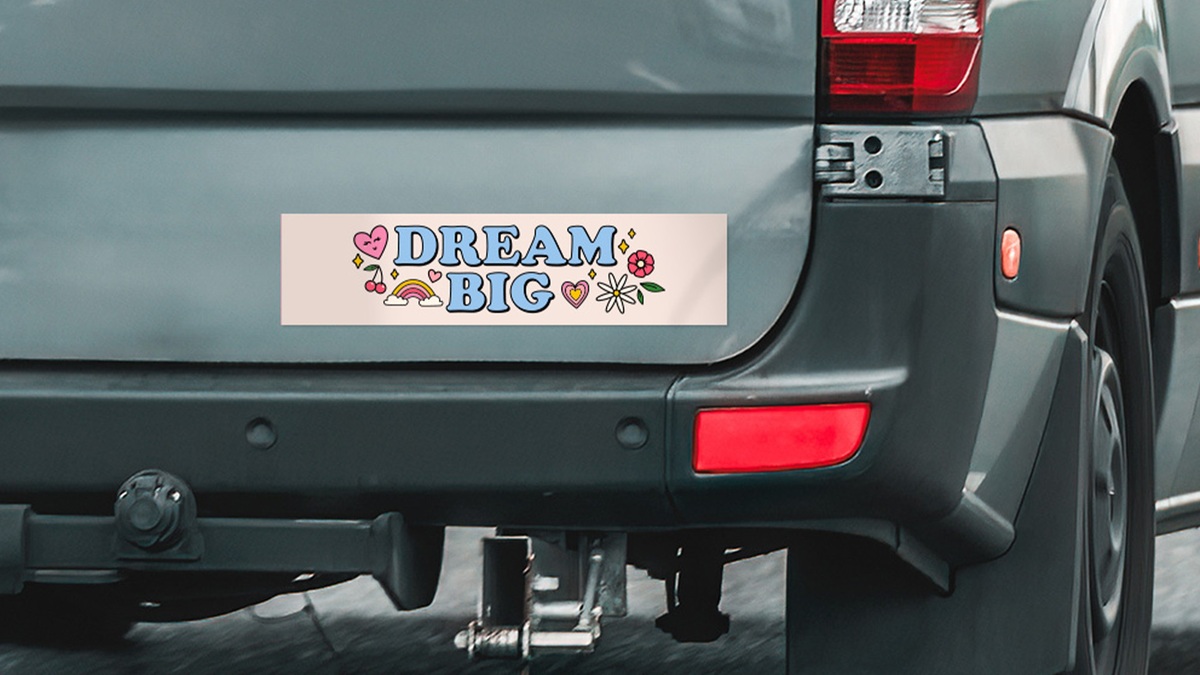
The History of Custom Bumper Stickers
Custom bumper stickers have been riding along with us for decades — almost as long as bumpers themselves. But the idea of using your mode of transportation for advertising? That’s been around since well before the 1900s, when signs were strapped to horse-drawn buggies. Turns out, the urge to turn your ride into a message board is nothing new.
How Bumper Stickers Got Their Start
Cars didn’t originally come with bumpers — that didn’t happen until Ford released the Model A in 1927. And even then, bumper stickers weren’t quite on the scene yet. In those early days, people used cardboard signs tied with rope to share messages from their bumpers. As you might guess, those signs didn’t hold up well in bad weather.
It wasn’t until pressure-sensitive labels were invented that real stickers became possible. Ray Stanton Avery is credited with creating the first modern adhesive label, paving the way for bumper stickers as we know them today. In the 1940s, Forrest P. Gill of Kansas City, Missouri combined adhesive-backed paper with fluorescent paint to create the first custom bumper stickers — originally called “bumper strips.”
Stickers Hit the Road
Tourism was the first industry to really embrace bumper stickers. Resorts and attractions began sticking them onto visitor cars in parking lots — yes, without permission. While that strategy wouldn’t fly today, it worked back then. Visitors would head home with a sticker on their bumper, unknowingly promoting the place they just visited to every driver along the way.
The next big leap came during the 1952 U.S. presidential election. Dwight D. Eisenhower’s “I Like Ike” slogan made bumper stickers a staple of political campaigns — a tradition that continues today. Campaigns realized they could get their message on the road and in front of millions for just pennies per sticker.
Printing Evolves — And So Do Stickers
Early bumper stickers were all handmade, which wasn’t scalable. That changed with the adoption of flexography — a printing method around since the late 1800s. In the 1950s, safer inks made flexographic printing more popular. It allowed for faster, more efficient production of self-adhesive vinyl stickers.
By the 1960s, James Black’s invention of the General Press brought screen printing into the mainstream, becoming the new standard for sticker production. Screen printing reigned for decades until the 1990s, when digital printing revolutionized the industry. Suddenly, designs could be uploaded and printed directly from computers, making short runs easy and long runs even faster.
Bumper Stickers Today
Fast forward to now — bumper stickers are everywhere. They're still one of the most effective tools for political messaging. Churches and nonprofits use them for outreach. Individuals slap them on to make a statement, share a joke, or send a message like “Baby on Board” or “Student Driver.”
They come in all shapes and sizes, in materials that last through sun, snow, and rain. Whether you love them or love to hate them, bumper stickers aren’t going anywhere — and we’re here for it. Custom bumper stickers continue to be one of the most affordable, creative, and visible ways to share your voice on the road.


